-
Oak Brook
📍📞 630-705-99992625 Butterfield Rd. Suite 102E
Oak Brook, IL 60523📠 Fax: 630-705-1422✉️ inquiry@vervecollege.edu 🗺️ Open in Google Maps 🍎 Open in Apple Maps🕒Office HoursMon–Fri: 9:00 AM – 6:00 PM
Sat: 10:00 AM – 4:00 PM
Sun: Closed -
Chicago
📍📞 312-920-8822216 W. Jackson Blvd. Suite 900
Chicago, IL 60606📠 Fax: 312-658-0775✉️ inquiry@vervecollege.edu 🗺️ Open in Google Maps 🍎 Open in Apple Maps🕒Office HoursMon–Fri: 9:00 AM – 6:00 PM
Sat: 10:00 AM – 4:00 PM
Sun: Closed - Email:inquiry@vervecollege.edu
- Make a Payment
 Sign up
 Login
Login
- Home
- Programs
- Admission
- Resources
- ATI Entrance Exam Resources
- New E-Digital Library
- Refer a Friend
- School Newsletter
- Events
- Employers
- Job-Network
- Alpha Beta Kappa Candidates
- Verve College Library
- Graduation and Pinning Ceremony Photo Galleries
- Textbook Information
- Career Services
- Tutoring
- School Catalog
- FAQ
- Constitution Day Program
- Alumni
- Verve College Plans
- Financial Aid
- HEERF Reporting
- Satisfactory Academic Progress
- Apply For Financial Aid
- Net Price Calculator
- Return of Title IV Funds (R2T4)
- Financial Aid Office Code of Conduct
- Contact
- FAQs
- Verification Policy
- Vaccination Policy
- Student Right-to-Know Act
- Misrepresentation
- Information Security Program
- Academic Award Year
- Availability of Employee
- Cost of Attendance
- Health & Safety Exemption Requirement
- Students Rights and Responsibilities
- Leave of Absence
- Pell Formula
- Military Students
- Grants/ Scholarship Policy
- Contact Us
- Testimonials
- Blog
Is a Nursing Career Right For You?
Take The Free Quiz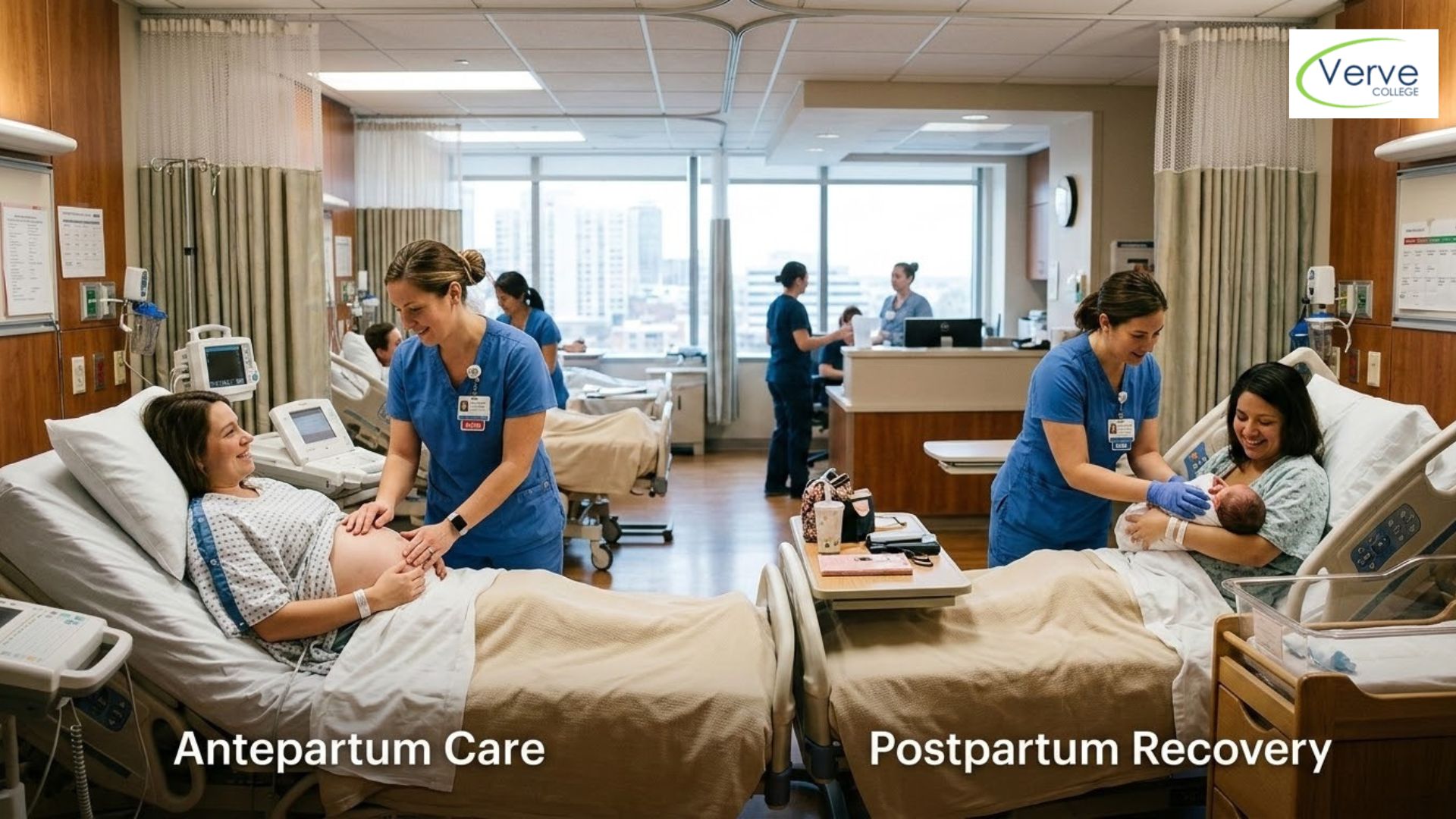
Antepartum vs Postpartum Nursing: What Every Nursing Student Should Know
Antepartum vs Postpartum Nursing: What Every Nursing Student Should Know
If you’re studying for a nursing career, the terms antepartum and postpartum will come up early and often. Many students mix them up or only have a vague idea of what each phase actually involves. Understanding the difference matters because these two stages of care are completely different in terms of what the patient needs and what the nurse does.
This article breaks down both phases in plain language, explains what nurses do during each one, and helps you see how this knowledge fits into your bigger career goals.
Key Takeaways
- Antepartum refers to the period before birth; postpartum refers to the period after birth
- Both phases require careful monitoring, but the focus and risks are very different
- Nurses in these settings need strong assessment skills and a calm, supportive approach
- Understanding body systems in pregnancy starts with a solid foundation in courses like anatomy and physiology classes
- LPN roles exist in both antepartum and postpartum settings, making this relevant to your career path
- Knowing both phases helps you become a more well-rounded and confident nursing student
What Does Antepartum Mean?
Antepartum means “before birth.” This phase covers everything from conception through the end of pregnancy, right up until labor begins.
In a clinical setting, antepartum care focuses on monitoring the health of both the mother and the developing baby. Nurses in this setting watch for complications that could affect the pregnancy, such as preeclampsia (high blood pressure during pregnancy), gestational diabetes, or preterm labor.
The goal of antepartum nursing is to support a healthy pregnancy and catch warning signs early. This involves tracking vitals, reviewing lab results, educating the patient about what to expect, and providing emotional support during what can be an anxious time for many families.
What Nurses Do in Antepartum Care
Antepartum nurses spend a lot of time on patient education. They explain what certain symptoms mean, when to call for help, and how to manage things like diet, activity, and medications during pregnancy.
They also assist with fetal monitoring, which means checking the baby’s heart rate and movement patterns. If something seems off, the nurse is often the first person to catch it and escalate the concern to the physician or midwife.
What Does Postpartum Mean?
Postpartum means “after birth.” This phase typically begins right after delivery and can last anywhere from a few days in the hospital to several weeks at home.
Postpartum nursing care shifts focus from the pregnancy to the recovery of the mother and the care of the newborn. The body goes through major changes after delivery, and nurses play a critical role in helping patients navigate that transition safely.
Common concerns in the postpartum period include bleeding, infection, blood clots, breastfeeding difficulties, and postpartum depression. Nurses monitor for all of these while also helping the patient regain strength and confidence as a new parent.
What Nurses Do in Postpartum Care
Postpartum nurses check the patient’s uterus to make sure it’s contracting properly, monitor lochia (the vaginal discharge that follows delivery), and assess pain levels. They also teach new parents how to care for their newborn, including feeding, bathing, and recognizing signs that something may be wrong.
Emotional support is a big part of the job here too. Many patients experience a range of feelings after birth, from joy to anxiety to sadness. A good postpartum nurse knows how to check in on a patient’s mental health without making them feel judged.
How These Two Phases Connect
Antepartum and postpartum care are two chapters of the same story. The decisions and interventions made during pregnancy often shape what happens after delivery. A patient who had a complicated antepartum period may need closer postpartum monitoring.
For nursing students, understanding both phases helps you see maternal care as a full picture rather than isolated events. You start to understand why early education during pregnancy leads to better outcomes after delivery.
If you’re newer to concepts like how hormones change during pregnancy or how the uterus responds to labor, building your knowledge through lpn programs that include clinical foundations can give you real context for these topics.
A Common Misconception Worth Clearing Up
Many students assume postpartum care is simply about recovery and that the hard work is mostly done after delivery. That is not accurate.
The postpartum period carries serious risks. Conditions like postpartum hemorrhage (heavy bleeding after birth) and postpartum preeclampsia can develop quickly and become life-threatening if not recognized early. Nurses need to stay just as alert after birth as they were during pregnancy.
On the antepartum side, students sometimes think that if a pregnancy looks uncomplicated, monitoring is less important. In reality, conditions like placenta previa (when the placenta is positioned too low in the uterus) or gestational hypertension can appear without obvious symptoms, which is why consistent assessment matters throughout.
How to Prepare for Maternal Nursing as an LPN Student
If maternal and newborn nursing interests you, the best thing you can do now is build your foundational knowledge. Understanding how the body changes during pregnancy, how hormones influence the process, and how organ systems adapt is essential before you walk into a clinical setting.
That foundation starts before you ever step into a hospital. Students who enter nursing programs already familiar with body systems tend to feel more confident during clinicals and in class. Enrolling in a licensed practical nurse programs that blends classroom learning with hands-on clinical experience puts you in the best position to handle both antepartum and postpartum settings with real competence.
Conclusion
Antepartum and postpartum nursing are both deeply rewarding areas that require sharp clinical skills, good communication, and genuine compassion. Knowing what each phase involves gives you a head start as a nursing student and helps you see the full scope of care that mothers and newborns need.
Whether you end up working in a labor and delivery unit, a maternal care clinic, or a newborn nursery, this knowledge will follow you throughout your career. Start building it now, and you’ll walk into your nursing program with more clarity and confidence than most.
Get Your Nursing Career Training Readiness Score Now!
FAQs
1. What is the main difference between antepartum and postpartum care?
Antepartum care takes place before birth and focuses on monitoring the health of the mother and baby during pregnancy. Postpartum care begins after delivery and focuses on the mother’s recovery and newborn care. Both phases involve close observation, patient education, and support.
2. I’m not sure if I can handle the emotional side of maternal nursing. Is that normal?
Completely normal. Maternal nursing can be emotionally intense because it involves both joyful and difficult moments. Most nursing programs and clinical rotations help students build coping strategies over time. The key is learning how to stay present and professional while also being human with your patients.
3. Do LPN programs cover antepartum and postpartum nursing?
Yes. Most LPN programs include maternal and newborn care as part of the curriculum. You’ll learn the basics of both phases in class and get exposure to real patient care during clinical hours. If you’re considering this path, look for a program that balances classroom instruction with hands-on training.
Most Popular Blogs Posts

What Is Cardiac Output? A Simple…
October 6, 2026 Read More
What Should You Look for in…
October 6, 2026 Read More
How LPN Training Prepares Students for…
October 5, 2026 Read More
What Is Inflammation? A Simple Guide…
October 1, 2026 Read More